

Common shoulder problems in Pakistan include rotator cuff injuries, frozen shoulder, tendon irritation, arthritis and injuries after a fall. The same pain can have different causes, so treatment starts with understanding your symptoms, not guessing from where it hurts.
This guide explains ten shoulder conditions in plain language, the signs people often notice and the kinds of care that may help. It also shows when a shoulder needs prompt medical attention.

What Are the Most Common Shoulder Problems?
Shoulder pain may come from the muscles and tendons that help lift the arm, the joint itself, or an injury such as a fracture. Stiffness, weakness, pain at night or trouble reaching overhead can offer clues, but several conditions share these signs. A clinician may need to examine the shoulder to identify the cause.
1. Rotator Cuff Tears
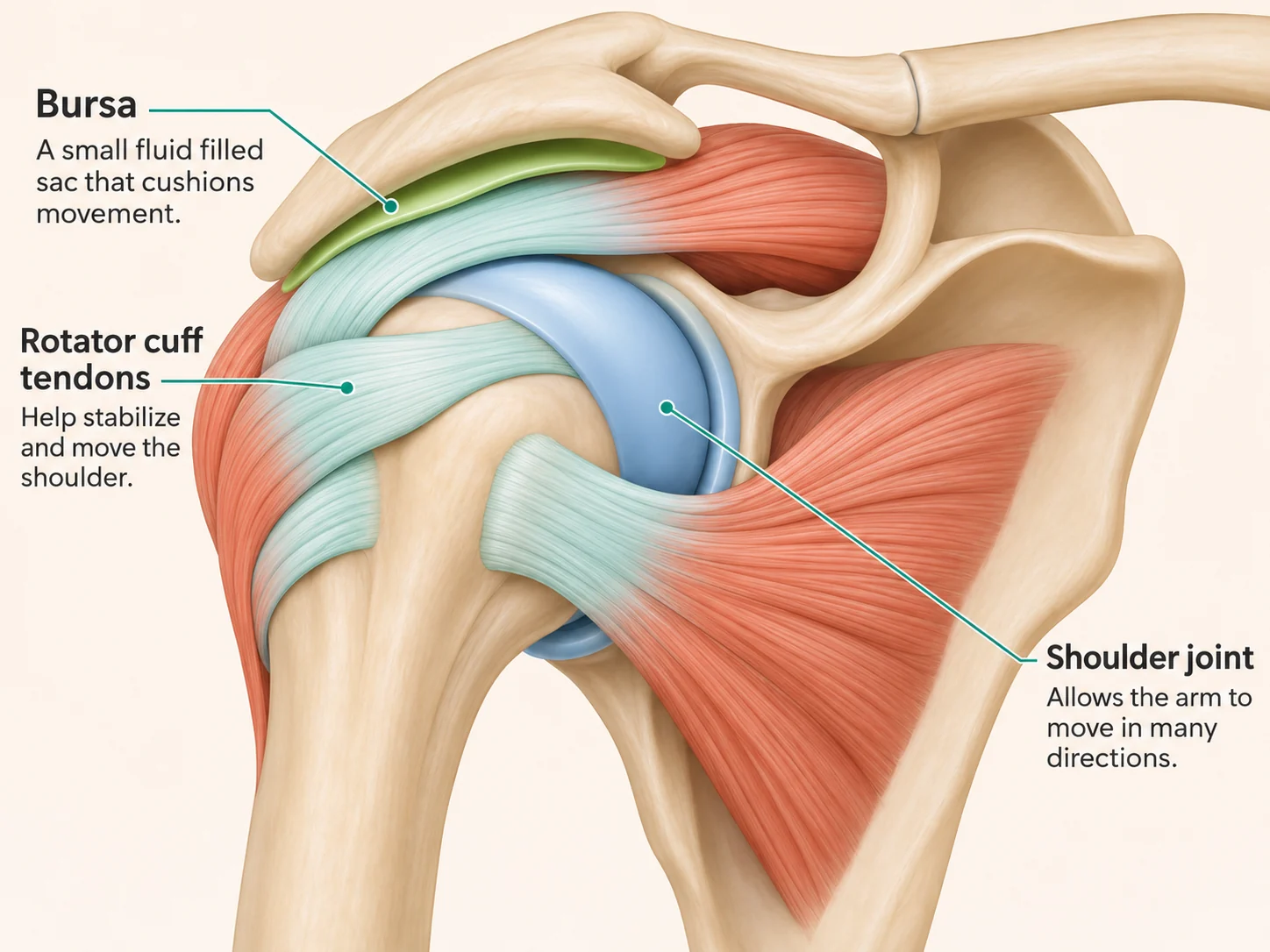
The rotator cuff is a group of muscles and tendons that helps lift and steady your arm. A tear can happen after an injury or develop gradually. You may notice weakness, pain when lifting the arm or discomfort at night.
Care depends on the size of the tear, your symptoms and your daily needs. A clinician may recommend activity changes and guided exercises. Some tears need an assessment by a shoulder specialist. Read our guide to rotator cuff and nerve pain if you want a closer look at these symptoms.
2. Frozen Shoulder
Frozen shoulder causes pain and a gradual loss of movement. Reaching behind your back, getting dressed or lifting your arm can become difficult. It often develops slowly and can last many months.
The care plan may include gentle movement, exercises and pain relief discussed with a qualified medical professional. Forceful stretching can make a painful shoulder feel worse, so the right approach depends on its stage and severity.
3. Shoulder Impingement
With shoulder impingement, lifting your arm can irritate tissues around the top of the shoulder. Pain is often more noticeable when reaching overhead or doing repeated movements.
A clinician can check whether tendon irritation, bursitis or another condition is involved. Activity changes and a suitable exercise plan may help. Persistent pain deserves an assessment.
4. Shoulder Bursitis
A bursa is a small cushion that helps tissues move smoothly near a joint. When it becomes irritated, raising or lying on the shoulder may hurt. Bursitis can appear alongside tendon problems, so symptoms alone may not tell you which one is causing the pain.
Care may involve reducing movements that aggravate the shoulder and following professional advice about exercise and pain relief.
5. Tendon Irritation
Tendons connect muscle to bone. Repeated lifting, sport or other demanding activity can irritate shoulder tendons. You may feel pain while using the arm, especially above shoulder height.
Treatment often begins with adjusting painful activities and rebuilding movement and strength gradually. A clinician can help decide what is suitable if the pain continues or the arm feels weak.
6. Labral Tears
The labrum is a rim of tissue that helps keep the shoulder joint stable. It can be injured during a fall, sudden pull or repeated overhead activity. Some people feel a catching sensation, pain or a sense that the shoulder is unstable.
A proper assessment matters because treatment varies. Guided rehabilitation may be appropriate for some people, while others need specialist advice.
7. Shoulder Arthritis
Arthritis can cause joint pain, stiffness and difficulty moving the shoulder. The discomfort may build gradually and affect sleep or everyday tasks.
Care depends on the type of arthritis and how much it affects your life. Movement guidance, pain management and medical assessment may all have a role. A shoulder examination helps avoid treating every stiff shoulder as arthritis.
8. Shoulder Fractures
A fall or direct impact can break a bone near the shoulder, such as the collarbone or upper arm. Severe pain, swelling, bruising or a change in shape may follow.
A suspected fracture needs prompt medical assessment. Imaging may be needed to confirm the injury and decide on treatment. Do not try to move a badly injured shoulder back into place.
9. Shoulder Dislocations
A dislocation happens when the upper arm bone moves out of its normal position in the shoulder joint. The shoulder may look different, feel very painful or become difficult to move.
Seek urgent medical care if you suspect a dislocation. A qualified medical team can assess it and decide how to restore the joint safely. Rehabilitation may be needed afterward to help reduce repeat injuries.
10. Pain Referred from the Neck or Nerve
Sometimes pain felt around the shoulder starts in the neck or involves an irritated nerve. Tingling, numbness or pain travelling into the arm can be a clue. These symptoms do not always mean the shoulder joint itself is injured.
Assessment can help locate the source. New weakness or persistent numbness should be checked promptly rather than managed as routine shoulder soreness.

How Can You Tell When Shoulder Pain Needs Attention?
Pain while reaching overhead may suggest a tendon problem, while growing stiffness may occur with frozen shoulder or arthritis. A feeling that the joint might slip can point to instability. These are clues, not a diagnosis: different conditions can feel alike.
Arrange an assessment if pain keeps getting worse, limits everyday movement or does not improve after a short period of sensible self care. Seek prompt medical help after a fall if the shoulder changes shape, becomes badly swollen, or you cannot move your arm. Sudden weakness, lasting numbness or fever with a painful joint also needs timely assessment.
What Does Treatment Usually Involve?
Treatment depends on what is causing the problem. For suitable conditions, options may include adjusting activities, guided movement, strengthening and pain relief advised by a qualified clinician. A fracture, dislocation or serious tear may need imaging and specialist medical care. One exercise or treatment cannot suit every shoulder problem.
At Dr. Agha Ebrahim Chiropractic Clinic, an assessment can help determine whether conservative shoulder pain care is appropriate or whether you should be referred for medical evaluation. The clinic sees patients in Karachi and Islamabad.
Shoulder ki aam problems kaun si hoti hain?
Common shoulder problems include rotator cuff injuries, shoulder impingement, tendinitis, bursitis, frozen shoulder, arthritis and dislocation. They often cause pain, stiffness, weakness or a limited range of motion.
Causes range from overuse and sports injuries to poor posture and age related wear. See a doctor if the pain is severe, follows an injury or does not improve with rest, or if you have numbness or swelling.
A Clearer Next Step
Common shoulder problems can share the same symptoms, but they do not all need the same treatment. If pain or stiffness is affecting your routine, arrange an assessment to understand the cause and choose suitable care.
Frequently Asked Questions
What is the most common cause of shoulder pain?
There is no single cause for everyone. Tendon problems, bursitis, frozen shoulder, arthritis and injuries can all cause shoulder pain. An assessment helps identify what is affecting your shoulder.
Can a shoulder problem get better without surgery?
Many shoulder problems are managed with activity changes, guided exercise or other non surgical care. The right approach depends on the diagnosis and severity; some injuries require specialist treatment.
Is shoulder pain always caused by the shoulder joint?
No. Pain can sometimes come from the neck or an irritated nerve. Tingling, numbness or pain extending down the arm is worth discussing with a clinician.
When should I seek urgent help for shoulder pain?
Seek prompt medical attention after a significant injury, particularly if the shoulder looks misshapen, is badly swollen, or you cannot move the arm. Sudden weakness or persistent numbness also needs medical assessment.