

Rotator cuff pain vs nerve pain can feel similar, but the pattern offers clues. Pain when you lift your arm may start in the shoulder; tingling or numbness travelling into the hand may point to a nerve. In Pakistan, a clinician can check both your shoulder and neck before recommending care.
These clues cannot confirm a diagnosis on their own. This guide explains what to notice, when to seek help and why the source of pain matters.

What Is the Difference Between Rotator Cuff Pain and Nerve Pain?
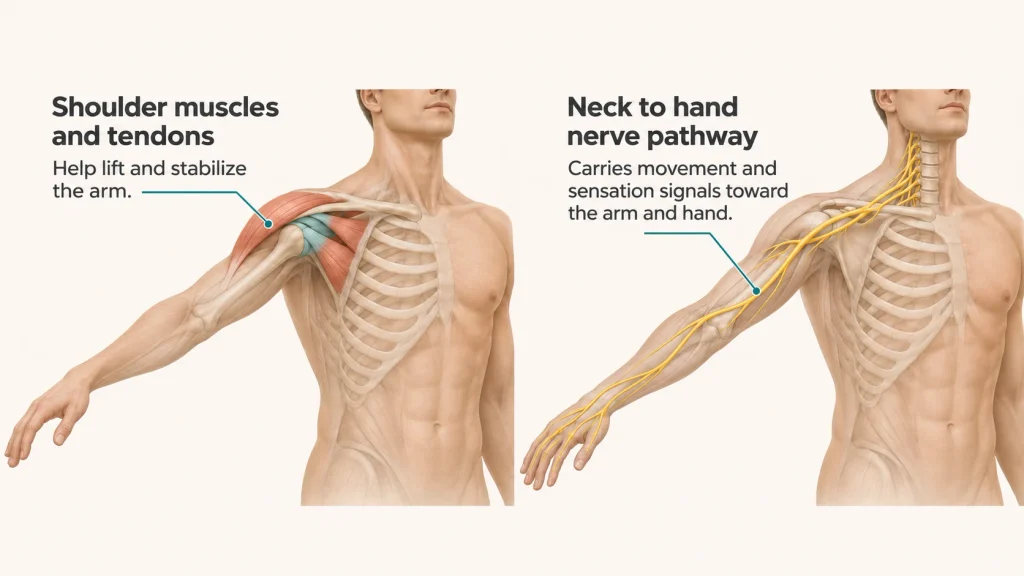
The rotator cuff is a group of muscles and tendons that helps lift and steady your arm. When these tissues are irritated or torn, certain shoulder movements can hurt or feel weak. A nerve problem may start in the neck and send pain, tingling or numbness through the shoulder and down the arm. Both problems can happen at once, so the location of pain is only part of the picture.
Where do you feel the pain?
Rotator cuff pain is often felt around the outside or front of the shoulder and may reach the upper arm. Pain related to a nerve in the neck can begin around the neck or shoulder and travel farther down the arm. Tingling in the hand is a useful detail to mention during an assessment.
Which movements make it worse?
Reaching overhead, lifting an object or lying on the painful shoulder may make rotator cuff symptoms more noticeable. With nerve related symptoms, neck movement can sometimes change the pain or tingling. Neither pattern is reliable enough to diagnose yourself.
What other signs matter?
Shoulder weakness may make it harder to lift or turn your arm. Nerve irritation may come with pins and needles, numbness or weakness extending into the arm or hand. Because the signs overlap, a clinician needs to ask about your symptoms and examine the shoulder and neck.
What Can Cause Rotator Cuff Pain?
Repeated overhead work, sports, age related changes or a sudden injury can affect the rotator cuff. The problem may be irritation of a tendon or a tear. Pain often becomes clearer when lifting your arm, reaching behind your back or sleeping on that side. A tear can also cause weakness, although symptoms vary from person to person.
Not every painful shoulder has a rotator cuff injury. Frozen shoulder, arthritis and other common shoulder problems can produce some of the same difficulties. An assessment helps narrow down the cause rather than treating every shoulder ache the same way.
How Can a Nerve in the Neck Cause Shoulder and Arm Pain?
Nerves travel from the neck into the shoulder, arm and hand. If one becomes irritated, you may feel pain around the shoulder blade or down the arm, sometimes with tingling or numbness. Symptoms that reach the hand are especially important to report.
The original version of this article linked lower back nerve pain and sciatica to shoulder symptoms. Sciatica usually affects the lower back, buttock and leg. Shoulder and arm symptoms are more likely to call for an assessment of the neck and upper body. If neck movement changes your symptoms, tell the clinician; it can help guide the examination.
Can You Have Both Problems at the Same Time?
Yes. Someone may have a shoulder injury and neck related nerve symptoms together. For example, pain on lifting the arm and tingling in the fingers should not be forced into one explanation. This is one reason to describe every symptom, even if one seems more noticeable than the others.
How Is the Cause Checked?
A clinician will ask when the pain began, whether there was an injury, which movements make it worse and whether symptoms travel into the arm or hand. They may check how the shoulder and neck move, look at arm strength and ask about changes in feeling. Sometimes a medical professional recommends imaging or further tests when the history and examination suggest they are needed.
The goal is to identify what needs care and whether a shoulder specialist or another healthcare professional should be involved. An online symptom comparison cannot replace this assessment.

What Care May Help?
Care depends on what is causing the symptoms. Rotator cuff problems may call for a shoulder focused plan, while nerve related pain can need assessment of the neck and nerve pathway. A clinician can consider your movement, strength and symptoms before recommending next steps.
When the rotator cuff is involved
The care plan may begin with adjusting painful activities and using guided exercises to restore comfortable movement and strength. A clinician may discuss pain relief or refer you for specialist assessment if there is a significant injury, marked weakness or symptoms that do not improve. A suspected sudden tear after an injury deserves timely medical evaluation.
When symptoms point to a nerve
Care depends on the cause and the severity of the symptoms. A clinician may recommend suitable activity changes, movement guidance, physical therapy or further medical assessment. Avoid copying exercises designed for a different condition, especially if weakness or numbness is getting worse.
At Agha Chiropractic Clinic, an assessment can help determine whether conservative shoulder pain care is appropriate and when medical referral is needed. If symptoms seem to begin in the neck, the clinic also provides information about neck pain treatment. Patients can seek consultations in Karachi and Islamabad.
When Should You Seek Medical Help?
Arrange an assessment if pain is worsening, disturbs sleep, limits daily activities or comes with persistent tingling or numbness. Seek prompt medical attention after an injury if you suddenly cannot lift the arm, the shoulder looks misshapen, or weakness is new or increasing. A hot, swollen joint with fever also needs prompt assessment. Shoulder pain accompanied by chest pressure, breathlessness or faintness needs emergency medical care.
Rotator cuff pain aur nerve pain mein kya farq hai?
Rotator cuff pain usually feels like a deep ache in the shoulder or upper arm. It often gets worse when you lift your arm overhead or lie on that side. Nerve pain tends to feel sharp, burning or tingly, and it may travel down the arm to the hand, sometimes with numbness or weakness.
The two can overlap, for example when a neck problem sends pain to the shoulder, so symptoms alone cannot give a diagnosis. See a doctor if you have numbness, tingling, weakness or pain that does not improve.
Know the Pattern, Then Check the Cause
Rotator cuff pain vs nerve pain is a useful question when shoulder and arm symptoms overlap. Notice what makes the pain worse, how far it travels and whether tingling or weakness occurs. Share those details during an assessment so your care follows the cause
Frequently Asked Questions
Can rotator cuff pain cause tingling in the fingers?
Tingling in the fingers may suggest a nerve is involved, although symptoms can overlap. Tell a clinician about both the shoulder pain and the finger symptoms so they can assess the shoulder and neck.
Does nerve pain always start in the neck?
No. A nerve can be affected in more than one place. Pain or tingling that starts near the neck and travels down the arm is one possible pattern, but the source requires an assessment.
Does pain at the back of the shoulder mean a rotator cuff tear?
No. Pain behind the shoulder can have several causes, including muscle strain, shoulder problems and pain linked to the neck. The pain location alone cannot confirm a tear.
When should I have shoulder weakness checked?
Seek timely medical assessment if weakness starts suddenly after an injury or is getting worse. Ongoing weakness that affects lifting, dressing or other daily tasks also deserves evaluation.